
A dynamic risk assessment is the check you make, on arrival and as the work goes on, that your risk assessment still fits the job in front of you. No regulation uses the name. The law requires the risk assessment, and a review when it may no longer be valid. The check on the spot is where that review starts. It never replaces the assessment.
A site form may ask for one before you start. Or the job you arrive at is not the one on paper. This page covers what is expected, when to carry on, change the plan or stop, and what to do with what you find.
Writing the assessment itself is covered in how to write a risk assessment.
What a Dynamic Risk Assessment Is, and What It Is Not
HSE's guidance on lone working says some employers use dynamic risk assessment, where workers make "operational decisions based on risks which cannot necessarily be foreseen".
It is not a second risk assessment, or a form the law requires. The same guidance says it "is not a substitute for a comprehensive risk assessment". Nor is it a hold point. A hold point in a method statement is a check you planned. The check on the day covers the ones nobody could plan.
If a Site Has Its Own Form
Some principal contractors, facilities managers and large clients have a short form for this check, which may be called a point of work risk assessment. Fill it in honestly, where the work is, before you start. It replaces neither the risk assessment nor the method statement. If it shows something the assessment missed, the assessment changes.
The Written Assessment and the Dynamic One
| Compared on | Written risk assessment | Dynamic risk assessment |
|---|---|---|
| When | Before the job, from the quote or survey visit. | On arrival, and whenever something changes. |
| Who | The employer, or a self-employed person with the duty. | Everyone doing the work. They see the conditions first. |
| What it covers | What can be foreseen about this job, in this place. | What could not be foreseen, or has changed since. |
| What it produces | A record of the hazards, who could be harmed, and the controls. | A decision: carry on with a change, change the plan, or stop. |
| Legal status | Required by regulation 3 of the Management of Health and Safety at Work Regulations 1999. Recorded if the employer has five or more employees. | No regulation names it. It feeds the review that regulation 3 requires. |
| What happens next | Reviewed when it may no longer be valid, and changed if needed. | Whatever it changes goes back into the written assessment. |
You may see the written one called a "static" risk assessment. The check on the day is what keeps it current.
Is a Dynamic Risk Assessment a Legal Requirement?
Not by name. No legislation in Great Britain uses the phrase.
What the law requires instead. Regulation 3 of the Management of Health and Safety at Work Regulations 1999 requires every employer to make "a suitable and sufficient assessment" of the risks. A self-employed person whose work is in construction or could put others at risk must make one too. The assessment "shall be reviewed" by whoever made it if "there is reason to suspect that it is no longer valid" or "there has been a significant change in the matters to which it relates". Any changes the review shows are needed must be made. Employers with five or more employees must record the significant findings.
Why that matters on site. A job that is not what the assessment describes is a reason to suspect it is no longer valid. The check on the spot starts the review. The change to the written assessment finishes it. HSE's guidance on managing risk ends the same way: "Update your risk assessment record with any changes you make."
If you are employed. You must take reasonable care of yourself and of others affected by your work, under section 7 of the Health and Safety at Work etc. Act 1974. Under regulation 14(2), you must tell your employer about any situation someone with your training would reasonably consider a serious and immediate danger, or a shortcoming in your employer's health and safety arrangements. The review itself is your employer's job.
The 1999 Regulations apply in Great Britain. Northern Ireland has its own, the Management of Health and Safety at Work Regulations (Northern Ireland) 2000.
When to Check Again
Check on arrival, before work starts, and again whenever conditions change or the work turns up something unexpected. Ask these questions each time.
- The place. Are the access, the building and the room what the assessment assumed?
- The people. Is anyone on site, at home or nearby who was not planned for?
- The work. Has opening up, stripping out or digging uncovered something the plan did not expect?
- The equipment. Is the kit what was planned, and in good condition?
- The conditions. Have the weather, the light or the state of the ground changed what is safe?
- The pause. Has there been a break, a handover or someone new arriving since you last checked?
If something goes wrong, or nearly does, stop and check before carrying on. If you are unsure whether a change counts, treat it as one. The risk assessment guide covers when the written assessment needs a review.
Carry On, Change the Plan or Stop
A dynamic risk assessment ends in one of three decisions.
Carry on, with a change. A control you can put in place now deals with the new hazard. Put it in place, tell everyone on the job, and note it.
Change the plan. The planned method no longer fits. Stop that task and re-plan it before anyone restarts it. Tasks it does not affect can carry on.
Stop. Make that part safe, keep everyone off it, and tell your employer or call in a specialist.
Where the danger is serious and imminent, get people clear first. Under regulation 8, employers must have procedures that let people "stop work and immediately proceed to a place of safety" when exposed to "serious, imminent and unavoidable danger".
If your people make these calls alone, HSE's guidance on lone working says they must be trained to make them, consider the control measures and actions open to them, and get support for their decisions. That is guidance, not a regulation.
Dynamic Risk Assessment Example: A Bathroom Refit
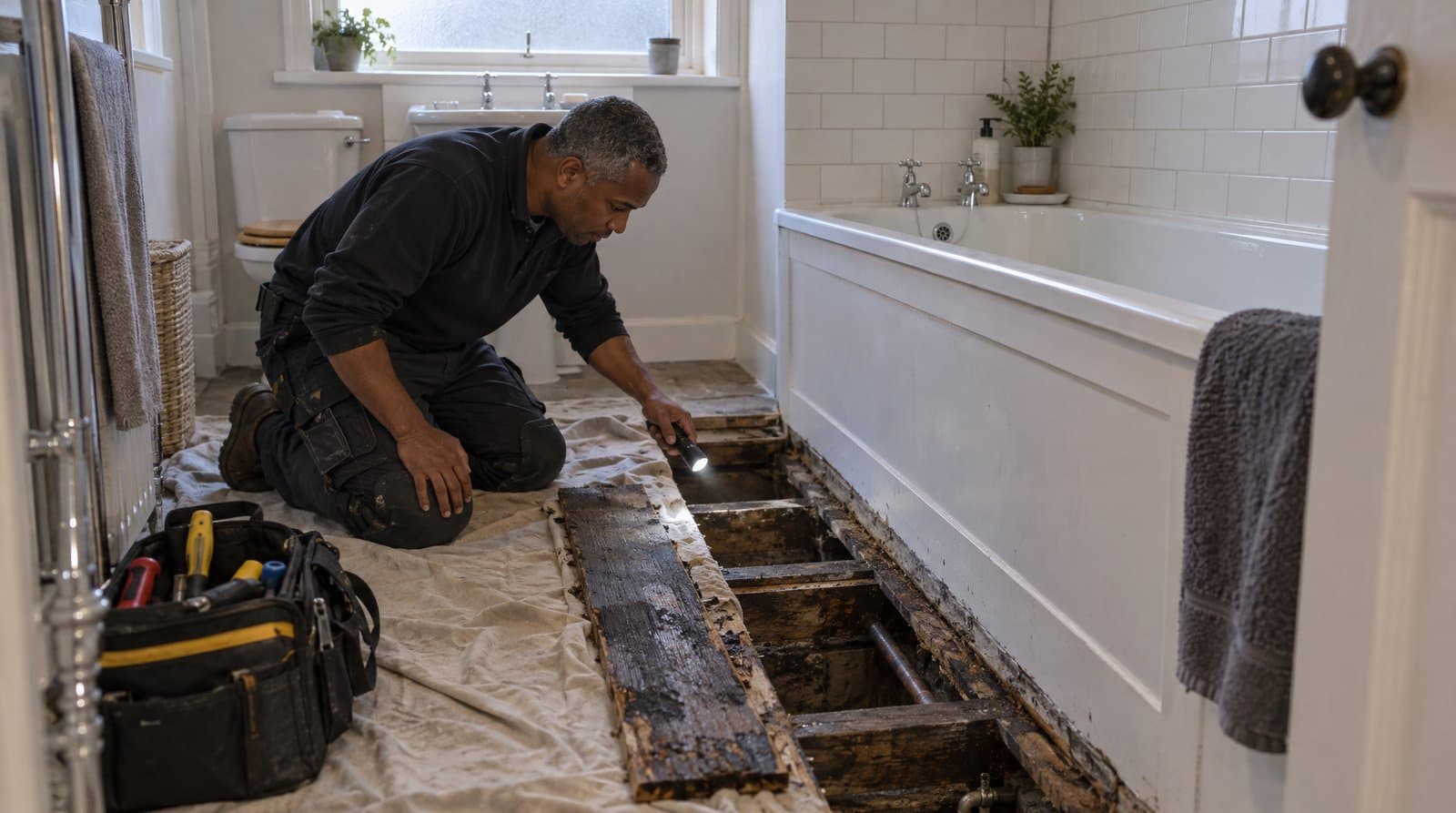
An example, not a real case. A plumbing firm of two, the owner and an employee, is refitting a first-floor bathroom in a 1930s semi-detached house. The owner wrote the risk assessment after the quote visit, when the householders said they would be out at work.
What the Assessment Planned For
- Removing the old suite. Two people carry it down to the van, route cleared first. The bath was boxed in, and the plan assumed a light one.
- Water. Isolated at the stopcock before any pipe is cut.
- Electrics. Not in the firm's scope. An electrician handles them on another visit.
- Asbestos. The house was built before 2000, and HSE's diagrams of where asbestos can occur include bath panels and toilet cisterns. An earlier survey found no asbestos in the bath panels or cistern. Anything else that could contain it is left alone until it has been identified.
- Dust and noise. From removing tiles, planned for an empty house.
What Was Different on the Day
| Found on the day | Outcome | What was done | What changed in the written assessment |
|---|---|---|---|
| The householder is working from home, in the room next to the bathroom. | Carry on, with a change | Noisy work and water-off times agreed with the householder. Landing and stairs kept clear. Bathroom door kept shut. | The dust and noise line rewritten for someone at home all day. |
| With the panels off, the bath turns out to be cast iron. | Change the plan | The bath stays put while its removal is re-planned: out whole with more people, or broken up in the room. The rest of the strip-out carries on. | The suite removal line rewritten for the new method. |
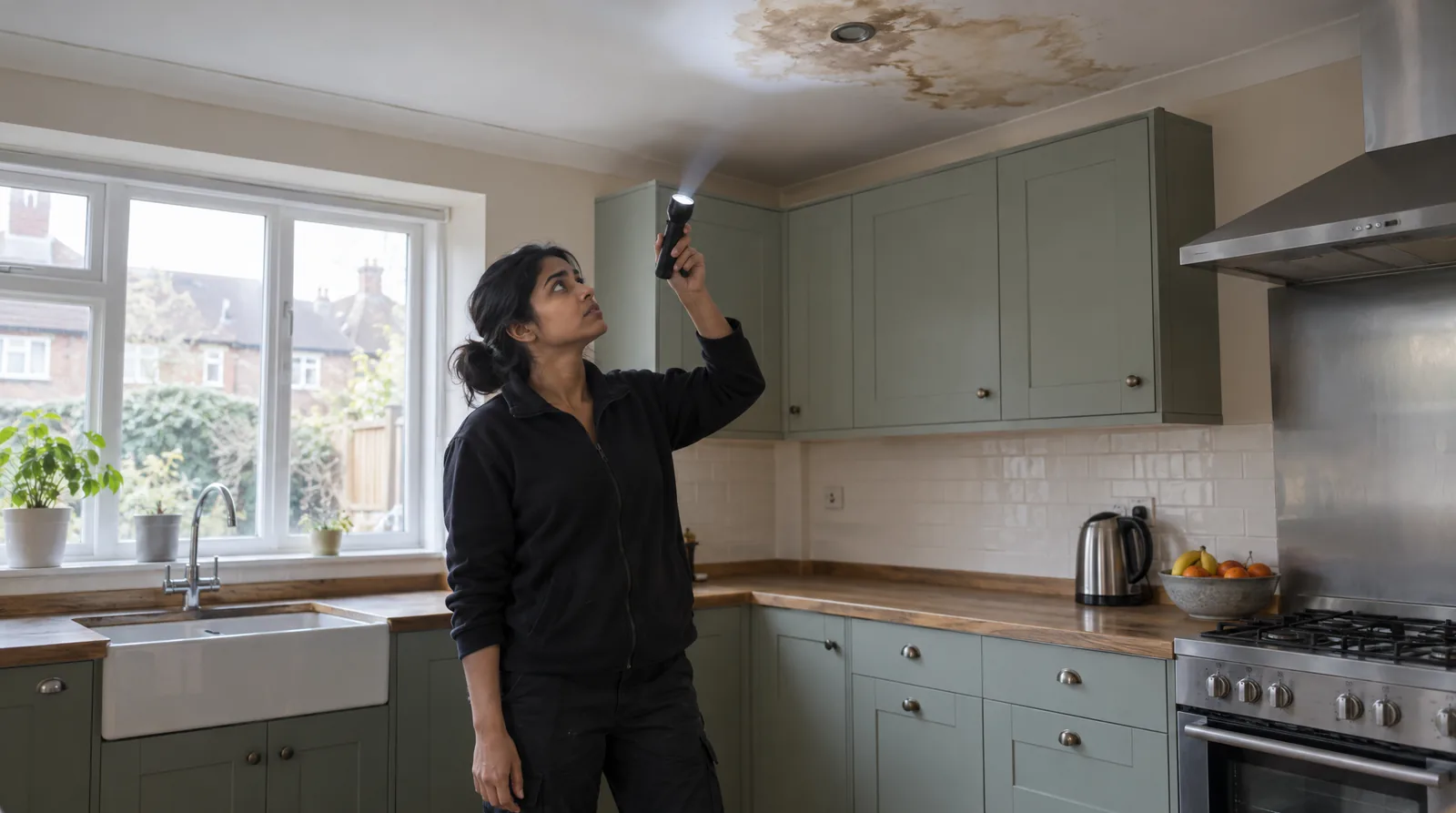
| The boards round the bath waste are dark and soft. The householder mentions a stain on the kitchen ceiling below, by the lights. | Stop that part | Nobody stands, kneels or puts anything on that area. The water stays off. Nobody touches the wet ceiling or the lights. The householder keeps them switched off until an electrician has isolated and checked them. | New lines for the weak floor and the wet ceiling by the lights. The floor is repaired before the new bath goes in. |
What Went Back Into the Assessment
At the end of the day the owner wrote the three changes into the assessment, dated and signed. The method statement changed to put the floor first, and the employee was briefed before work restarted. The firm's quote visits gained two questions: is the bath cast iron, and has there ever been a leak below?
The check on the day put this assessment right. The two new questions close those gaps before anyone arrives next time.
Getting What You Find Back Into the Written Assessment
- Tell. If you are employed, tell your employer or supervisor straight away. If you work for yourself, the review is yours.
- Write it in. Whoever made the assessment writes the change into it: what was found, what was decided, by whom and when.
- Brief it. If the order of work changed, so does the method statement, if there is one. Everyone on the job hears before carrying on.
- Carry it forward. Add the lesson to the questions you ask before the next similar job.
If the job has changed enough that the risk assessment needs rewriting, Safetyfox writes one from your answers to a short set of plain questions about the job, for you to read and change before you use it.
Frequently asked questions
Is a dynamic risk assessment a legal requirement?
Not by that name. No legislation in Great Britain uses the phrase. The law requires a suitable and sufficient risk assessment, reviewed if there is reason to suspect it is no longer valid or there has been a significant change. Checking on site that it still fits the job is where that review starts.
Does a dynamic risk assessment need to be written down?
No law requires the check itself to be written down, though some sites ask for it on their own form. Any change it makes to the risk assessment goes into the written assessment: HSE's guidance is to update your risk assessment record with any changes you make. Employers with five or more employees must record the significant findings.
Can a dynamic risk assessment replace a written risk assessment?
No. HSE's guidance on lone working describes dynamic risk assessment as workers making decisions about risks that cannot necessarily be foreseen, and says it is not a substitute for a comprehensive risk assessment. The written assessment covers what can be foreseen. The dynamic check covers what could not.
Do you need a new risk assessment if the job changes?
Not always. The law requires a review after a significant change, or when the assessment may no longer be valid, and changes where the review shows they are needed. Usually that means rewriting the lines the new conditions affect. If it is a different job altogether, write a new one.
Who carries out a dynamic risk assessment?
The people doing the work, because they see the conditions first. If you work for yourself, that is you, and so is the review that follows. An employee takes reasonable care, tells the employer about serious danger or a gap in the arrangements, and leaves the review to the employer.
When should you do a dynamic risk assessment?
On arrival, before work starts, and again whenever something changes: the work uncovers something the plan did not expect, people or equipment change, the weather turns, after a break or a handover, or after something goes wrong or nearly does.